PlayOJO responsible gaming limits and self-exclusion guide
PlayOJO responsible gambling limits can help you set clear money and time boundaries before problems build up. This guide explains deposit controls, reality checks, cooling-off periods, and how to self exclude PlayOJO step by step.
I wrote this guide for new and existing players who want a clear view of the control tools available on PlayOJO before problems build up. Here you’ll find a practical explanation of playojo responsible gambling limits, including deposit controls, time-based reminders, short breaks, and the full self-exclusion route. I also cover where these settings are usually found, when support may be needed, and how each option can help you keep play manageable. I treat these tools as normal planning features for money and time, not as emergency-only measures. Most options are usually available inside your account, while some may require help from support.
Best PlayOJO offers for Irish players
Three practical routes into safer, more controlled play at PlayOJO

Deposit Limits
- Choose daily, weekly, or monthly deposit limits
- Helps reduce impulsive top-ups under pressure
- Useful for routine budgeting, not just emergencies
- Lower limits are often applied straight away
Plan first · Play second
Time Controls
- Reality check pop-ups track session duration
- Helpful when play becomes automatic
- Session limits may log you out once reached
- Works well alongside deposit controls
Recommended for longer sessions
Self-Exclusion
- Stops login, deposits, and access for the chosen term
- Promotional contact is generally paused as well
- Usually cannot be cancelled early once active
- Best used alongside real-world support if needed
Use when stronger protection is needed
★ 4.7/5 — based on 1,247 player reviews
Popular slots in the UK
The most played titles of the last 30 days in the PlayOJO lobby












What are responsible gaming limits on PlayOJO?
Responsible gaming limits are account settings that let you put boundaries in place before spending, screen time, or emotions start to drift. In practical terms, they can restrict how much money you add, how long you stay active in a session, or whether you can access the account at all for a chosen period.
On PlayOJO, these tools may include financial limits such as deposit limits, time reminders like reality checks, short access blocks such as cooling-off periods, and longer restrictions such as self-exclusion. I see these as planning tools first. They are useful for players who simply want a set routine as much as for anyone who feels their habits are becoming harder to manage.
Used early, they can reduce impulsive top-ups, help you step away sooner, and make it easier to keep play as entertainment rather than a way to chase money.
Financial limits: deposits and spending control
The main financial control most players use first is the deposit limit. This lets you set a maximum amount you can add to your account across a selected period, usually a daily, weekly, or monthly cycle. Once that cap is reached, further deposits are blocked until the period resets.
I recommend this tool because it creates a fixed budget before you start. That reduces the chance of chasing losses or topping up under pressure. If you lower a limit, the change is often applied straight away. If you ask to increase it, the update may be subject to a cooling-off period before it becomes active.
In some cases, you may also be able to cap your total losses or stakes over a period, depending on what appears in your account settings.
- Daily deposit limit
- Weekly deposit limit
- Monthly deposit limit
- Optional additional loss or stake limits, if available
| Limit type | What it controls | Typical use case |
|---|---|---|
| Daily deposit limit | Maximum amount added in one day | Tight day-to-day budgeting |
| Weekly deposit limit | Maximum amount added in one week | Managing a regular weekly spend |
| Monthly deposit limit | Maximum amount added in one month | Long-range bankroll planning |
| Optional loss limit | Maximum net loss over a period | Extra protection during losing runs |
| Optional stake limit | Maximum total staked over a period | Controlling overall activity volume |
Time-based tools: reality checks and session limits
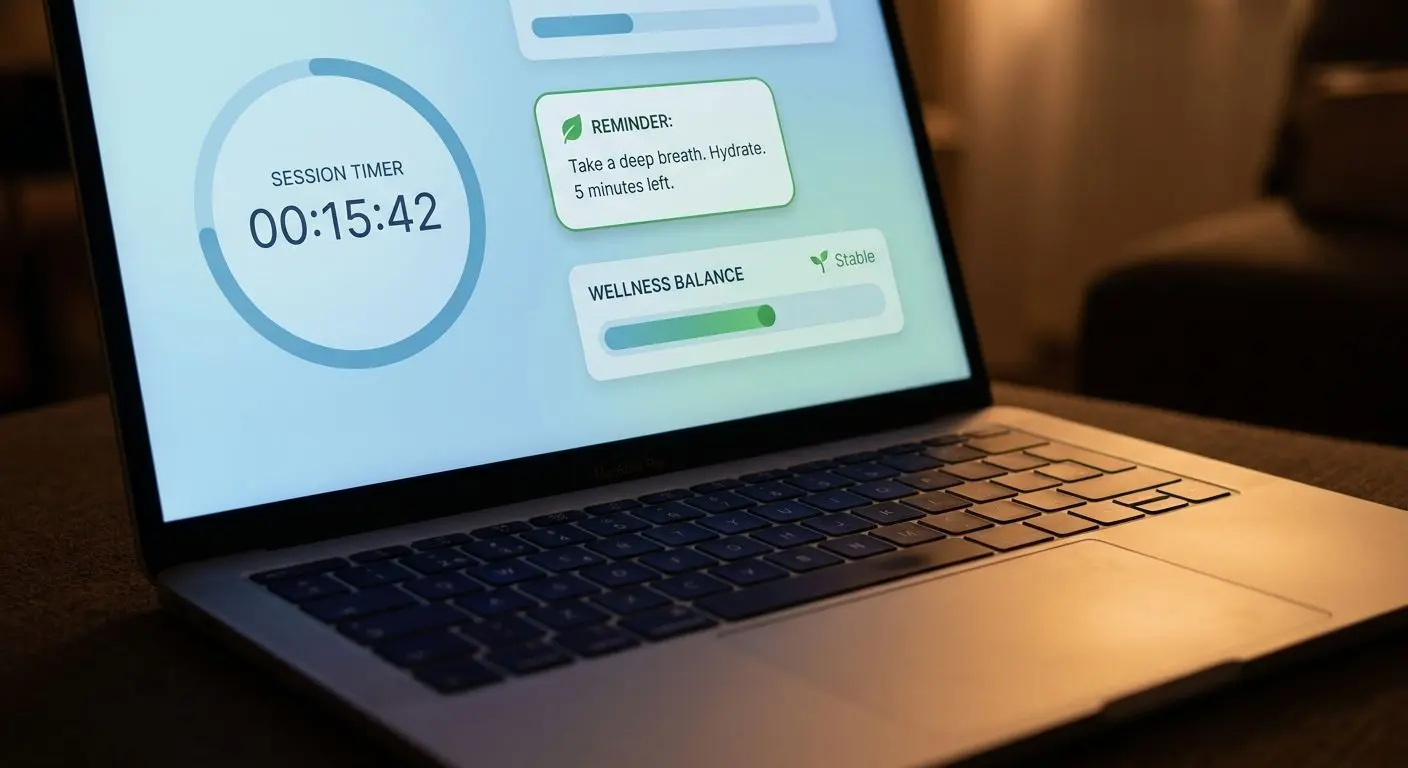
Money is only one side of control. Time-based tools are there to stop a session from stretching longer than intended. A reality check, sometimes called a game status reminder, is usually a pop-up that appears at regular intervals you choose. It may show how long you’ve been playing, plus a snapshot of spend, stakes, or balance movement.
If session limits are available, you may be able to set a maximum playing time. Once reached, the system can log you out automatically. Some platforms also use inactivity reminders or timed logouts after no action.
These tools are useful when play becomes automatic and you lose track of the clock. A short pause often changes decision-making for the better.
| Tool | What it does | When it triggers |
|---|---|---|
| Reality check pop-up | Shows session duration and account status | At regular intervals you choose |
| Session time limit | Caps the total length of a session | When your preset time is reached |
| Inactivity logout | Ends or pauses idle sessions | After a period of no activity |
| Session reminder | Prompts you to review whether to continue | At scheduled checkpoints |
Short breaks: time-out, cooling-off and temporary suspension
Short-term breaks are useful when you feel frustration, fatigue, or emotional play creeping in, but you are not yet choosing a long self-exclusion period. These tools block access for a defined amount of time and create distance from the account.
A time-out or short break usually covers a short period. A cooling-off period is broader and is meant to give you several days or weeks away from the account. A temporary suspension is a longer fixed period again. During any of these breaks, you generally cannot log in, add funds, or keep playing. Marketing messages are also commonly paused, and access usually returns automatically once the selected period ends.
In most cases, you can set these options in the responsible gaming section of your account, or you can contact the PlayOJO support team if you want help choosing the right level of restriction.
| Tool | Typical duration range | What happens to your account |
|---|---|---|
| Time-out | Short period | Access is blocked briefly and then restored |
| Cooling-off | Medium fixed period | Login and play are paused until the end date |
| Temporary suspension | Longer fixed period | Account remains unavailable for the chosen term |
Take a short break from PlayOJO
Self-exclusion on PlayOJO: how it works
Self-exclusion is a voluntary but serious restriction that blocks your access to the account for a longer period when you feel control is slipping. This is not a light setting and should not be treated as something to reverse the next day.
Once active, self-exclusion usually means you cannot log in, make deposits, or use the account for the entire selected term. Promotional emails, texts, or app notifications are generally stopped as well, although a short technical processing delay can happen. When the exclusion period ends, access may not always resume instantly or automatically. You may need to contact support if you wish to review your status once the term is over.
I also suggest checking how the operator applies self-exclusion across related accounts under the same licence. That scope can differ, so the exact wording in your account terms matters. If any part of it is unclear, ask support before confirming the restriction.
Self-exclusion is a strong account tool, but it does not replace professional help. If your habits are affecting finances, relationships, or mental health, speak with a qualified support service in your area as well.
When should you consider self-exclusion?
You should consider self-exclusion if you keep thinking about play when you are offline, try to win back losses, use money meant for bills or daily needs, or hide your activity from family or friends. If more than one of those signs feels familiar, a longer block may be the most practical step to regain control and create breathing space.
How to set limits and self-exclude on PlayOJO step by step
In most cases, you’ll find these settings under your account settings or inside a responsible gaming or safer gambling section. The path can vary slightly by device, but the process is usually straightforward.
- Log in to your PlayOJO account.
- Open your account settings or profile menu.
- Go to the responsible gaming or limits section.
- Choose the tool you want: deposit limit, time reminder, break, or self-exclusion.
- Select the amount or duration that fits your needs.
- Confirm the change and review any on-screen conditions.
- If the option is missing or unclear, contact the PlayOJO support team.
From my review of common account controls, lower limits often activate straight away. Increases, removals, or changes to protective settings may be delayed by a mandatory waiting period. That delay is there to stop impulsive reversals.
If you are setting limits before browsing the PlayOJO online casino lobby, that is usually the best time to do it. You can also ask support to explain how a setting may affect account access or promotions.
Manage my limits Talk to support about my limits
Additional tips for staying in control
Account tools work best when paired with simple habits. I suggest keeping your routine clear and repeatable:
- Only use money you can afford to lose.
- Decide your budget and time before you start, then stick to both.
- Avoid playing when upset, tired, or after drinking.
- Take breaks even if your limit has not triggered yet.
- Talk to someone you trust if your habits start to worry you.
Entertainment should stay entertainment. It is not income, and stepping away fully is a completely sound choice. You can also revisit your settings at any time and make them stricter if needed. Before you start exploring the PlayOJO online casino lobby, set your limits first and treat them as part of the session, not an afterthought.
Frequently asked questions about PlayOJO responsible gaming limits
How do I change or lower my PlayOJO deposit limit?
You can usually change a deposit limit in the responsible gaming area of your account. Lowering a limit is often applied straight away, while increasing it may involve a waiting period. The exact rule should appear on screen in your account. If you also want to review bonus terms separately, you can check the PlayOJO welcome offer details without affecting your decision to set stricter limits.
Can I cancel self-exclusion on PlayOJO once it is active?
Usually, no. Self-exclusion is designed as a serious restriction and in most cases cannot be cancelled before the selected term ends. If your situation changes, you can still discuss it with support, but you should not expect instant reactivation.
What is the difference between a cooling-off period and self-exclusion?
A cooling-off period is a temporary break for a limited term, after which access often returns automatically. Self-exclusion is stricter and longer-term, aimed at situations where control has become a real concern and stronger protection is needed.
Will I still receive bonuses and promotions if I set strict limits?
Financial limits on their own do not always stop marketing messages. Breaks and self-exclusion more commonly pause promotions and promotional contact, though processing can take a short time. If you want another contact route, PlayOJO also has a Facebook presence at https://facebook.com/playojo, but account support should still be handled mainly through official support channels.
What should I do if I think I have a gambling problem?
Start by considering the strongest tools available to you, including tighter limits and self-exclusion. Then speak with PlayOJO support and seek professional advice from a qualified service in your country. Recognising the issue early is a solid first step, and confidential help is often available at no cost.